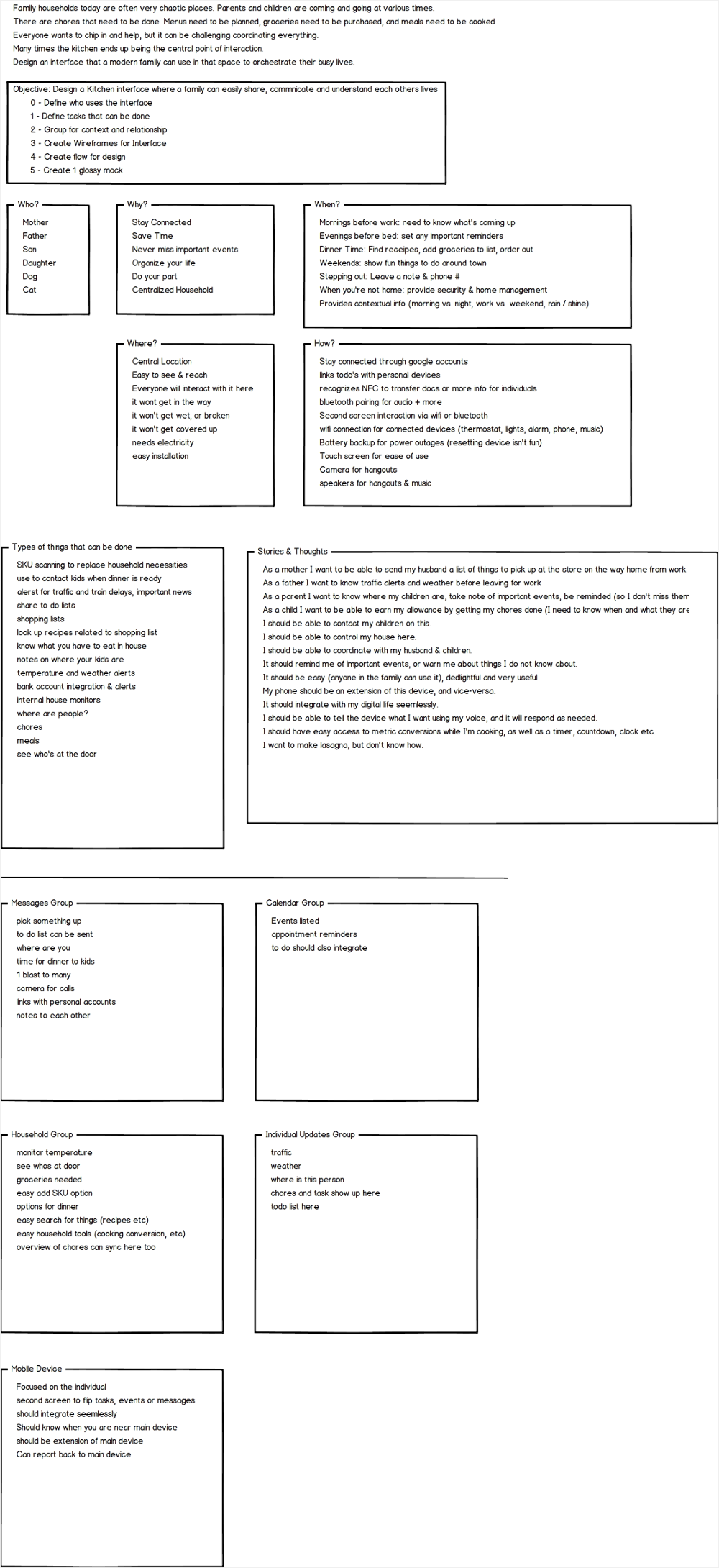
At the same time you have to be able to capture the particulate thoughts that come and go quickly. These can sometimes be the great ideas that turn a dull product into a brilliant one. I write them down, take note, and review them once I get to the ideation & wireframes phase.
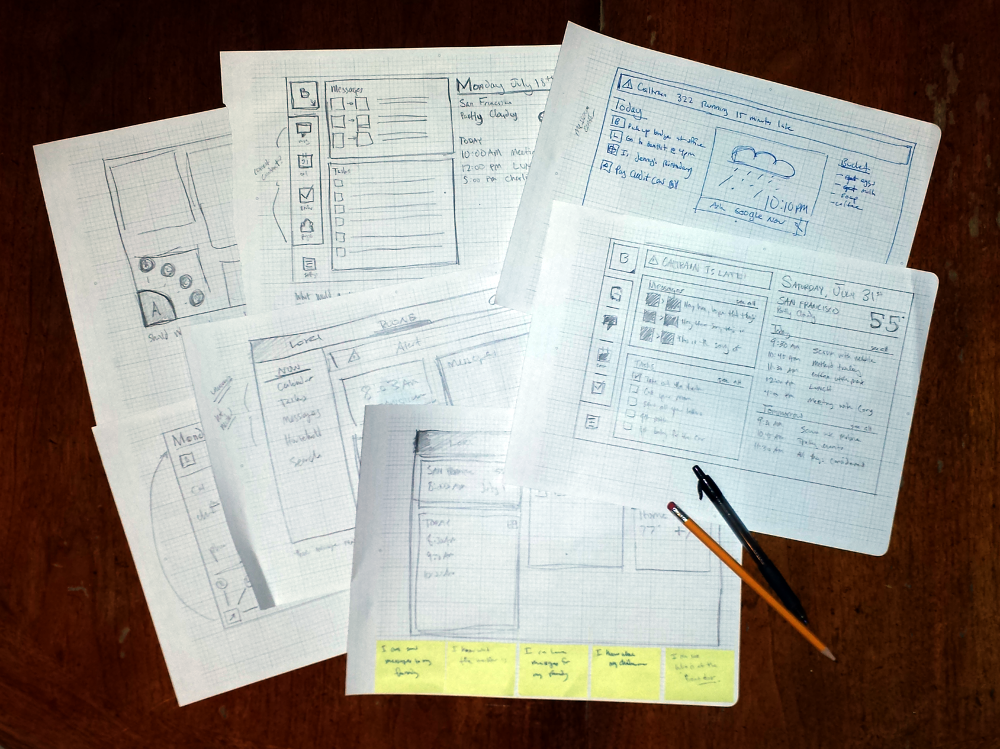
 Once I have captured my initial thoughts, I begin to sketch and wireframe. Generally this starts as rough hand drawn sketching (either on paper, or whiteboard). Once I have some ideas about things that I may want to try, I move onto my computer and begin wire-framing at full size.
This allows me to iterate quickly by hand to filter out ideas that don't work, and then focus on a few ideas that I feel could work.
 Working with wireframes, I prefer something fast and easy. I like to be able to group and copy elements between pages and wireframes. I want this to be about exploring the flow and making sure that the overall idea will work. If I start to it problems here, I know that I need to take a step back and rethink the approach.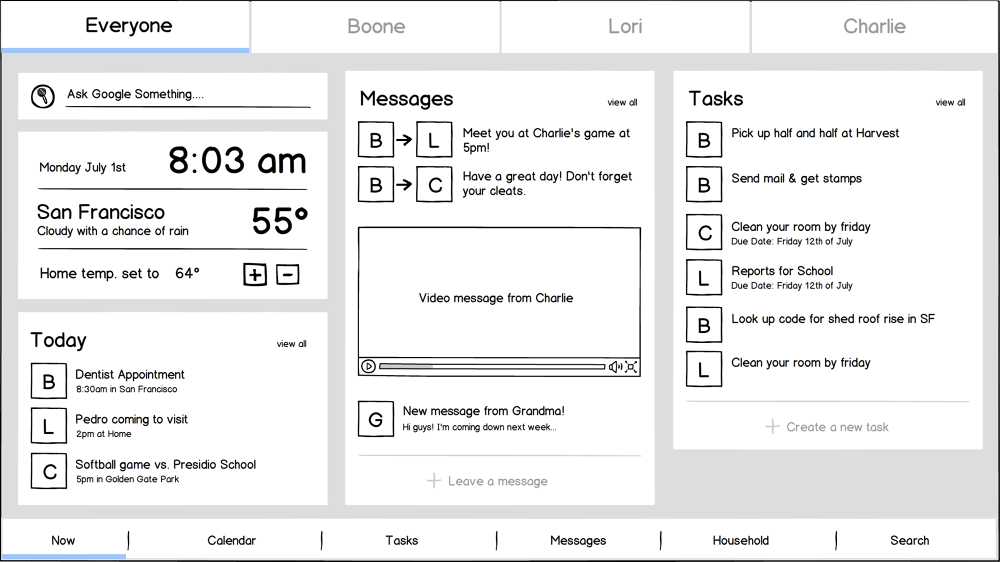
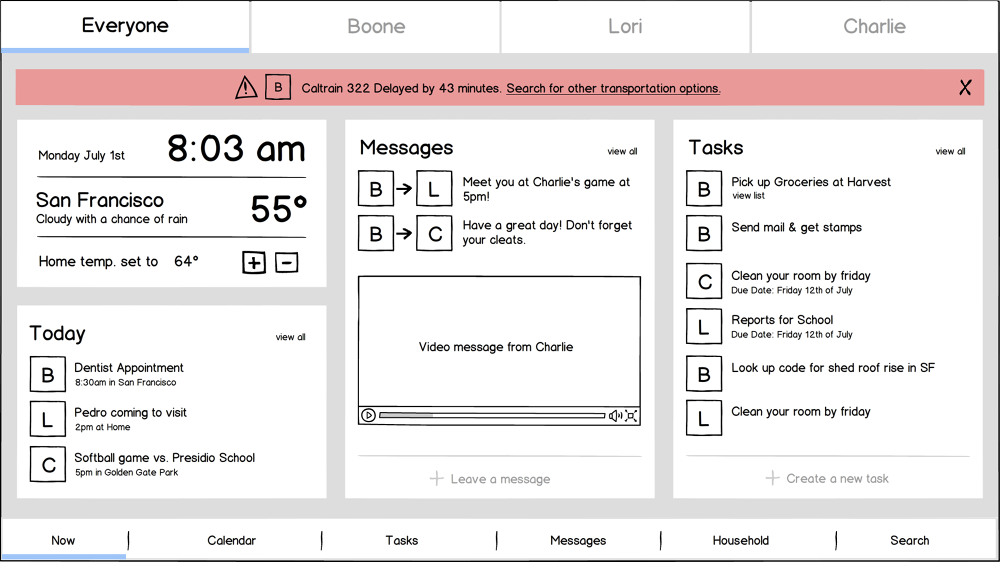
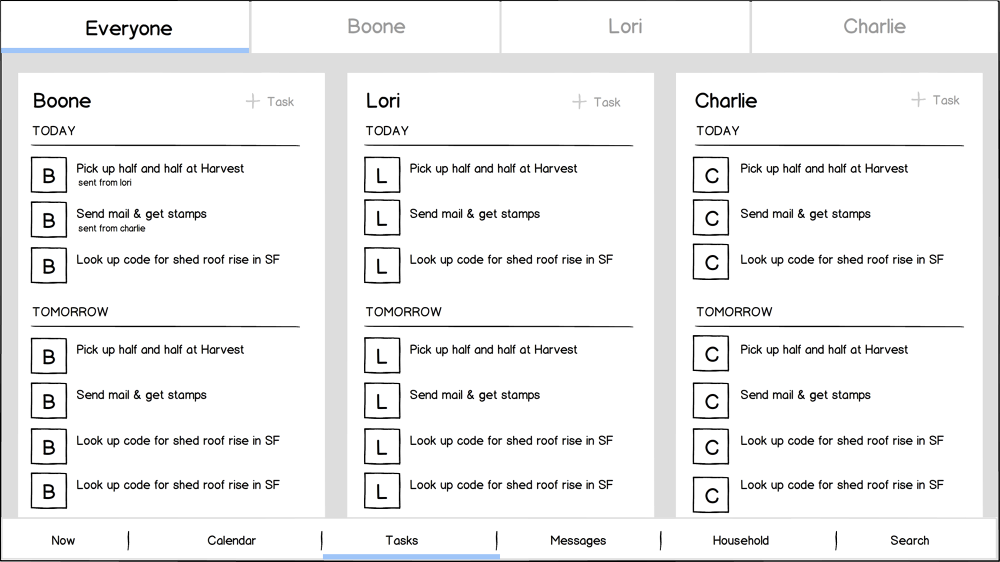
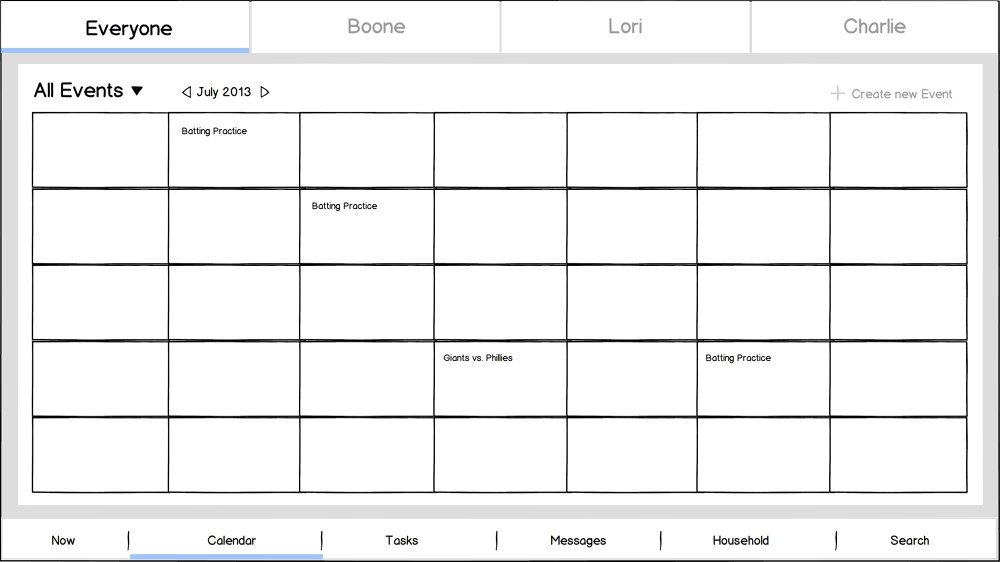
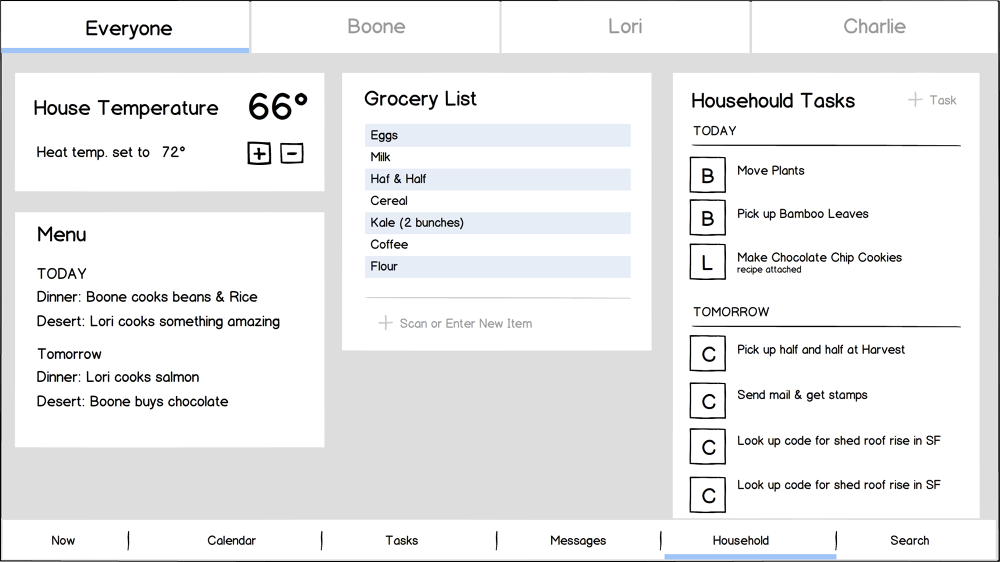
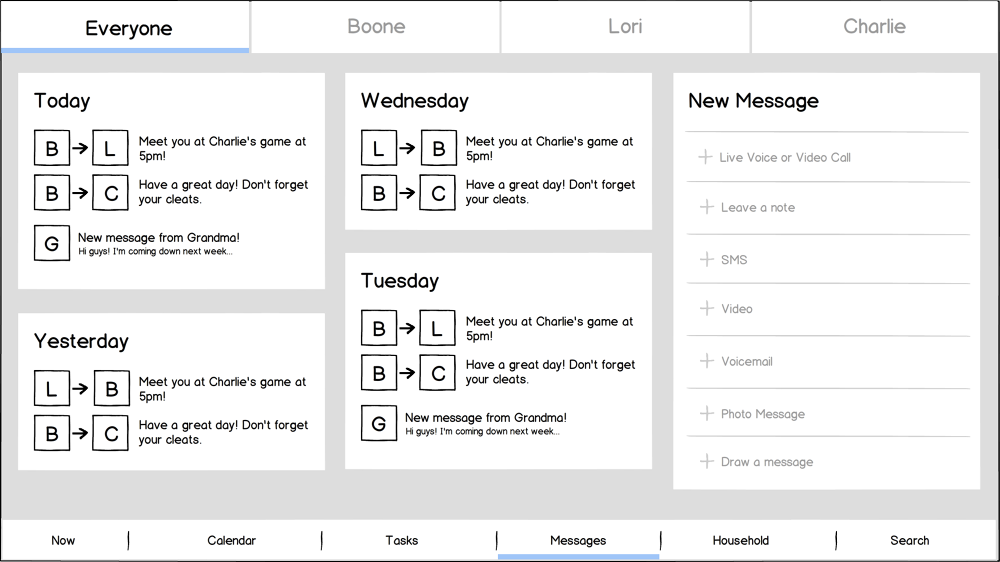
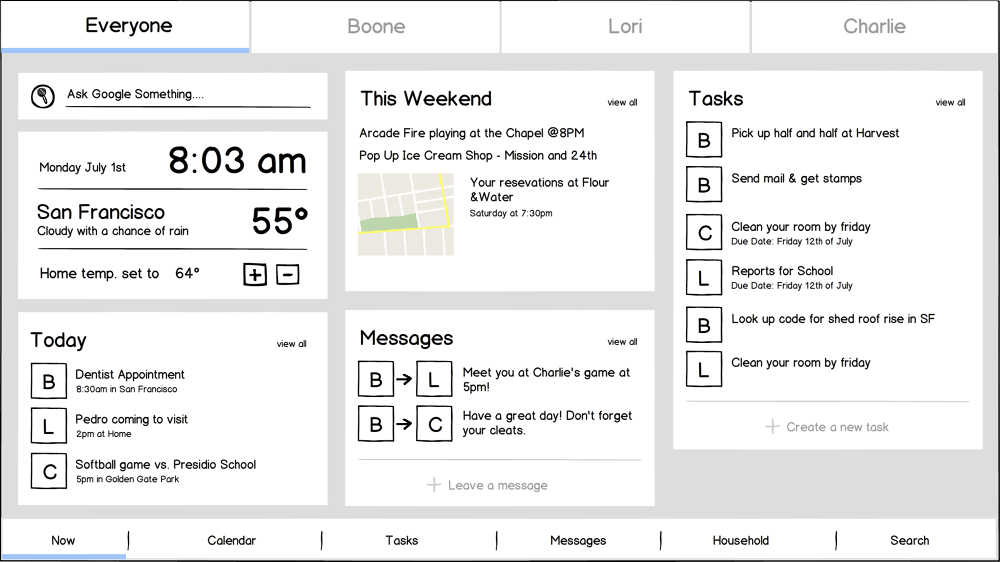 Once I have a good overview of the flow and feel confident that none of the big questions are outstanding, I like to produce one "glossy" version of the app. This helps to materialize the vision, and helps to throw out some of the excess that you thought was good during wire-framing, but turns out to just be excessive and in the way.
 This can lead to more questions. That's OK. Sometimes you need to take a few steps forward to really flush things out and realize that some things aren't working. With every iteration comes an improvement and a renewed focus on sharpening the vision.
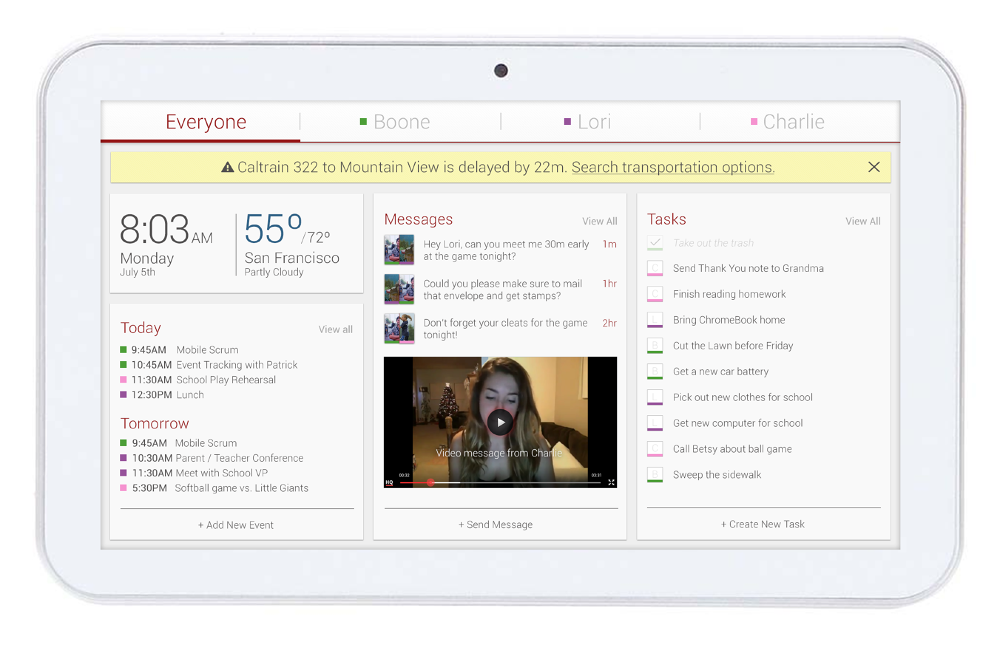
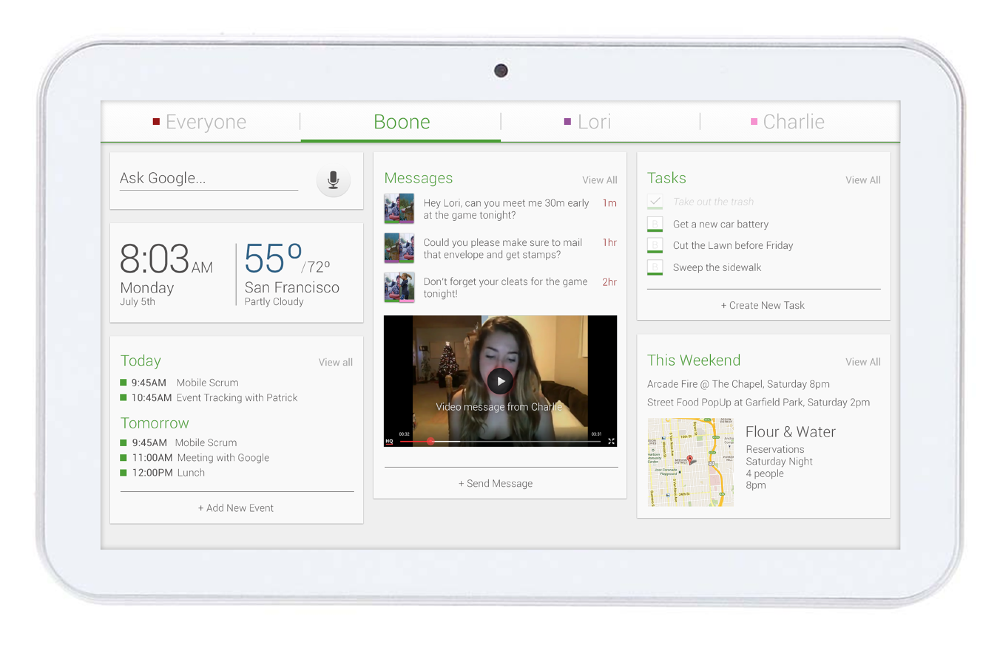
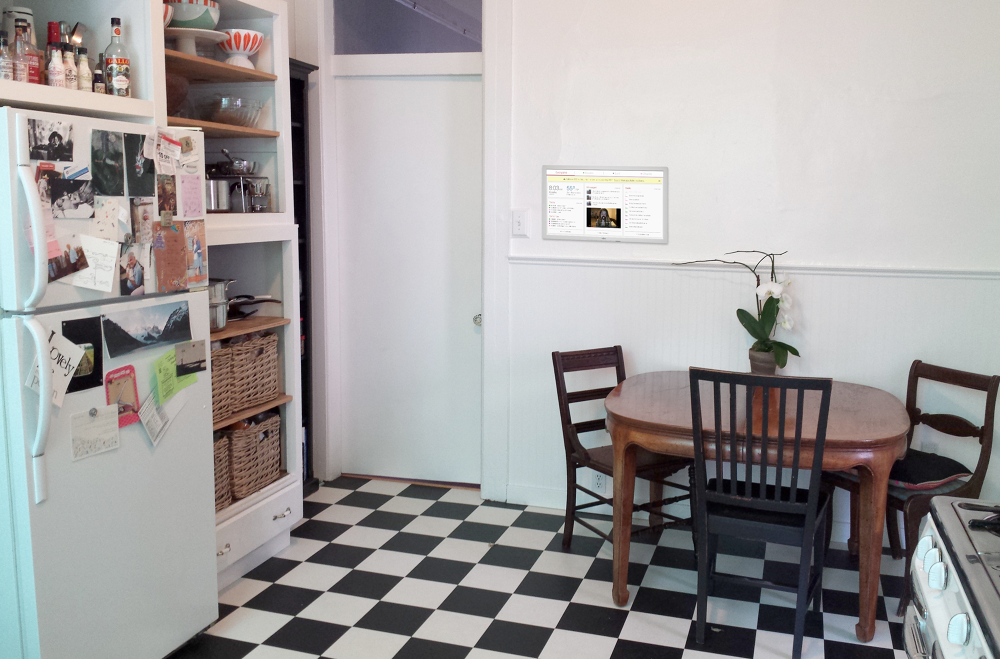
 In this case I've also mocked up a lifestyle shot to help me understand how this interface will exist within its space. This helped me understand that simplicity should really define it, help it to be both a comfortable tool for everyday use yet not steal the spotlight by attracting too much attention all the time.
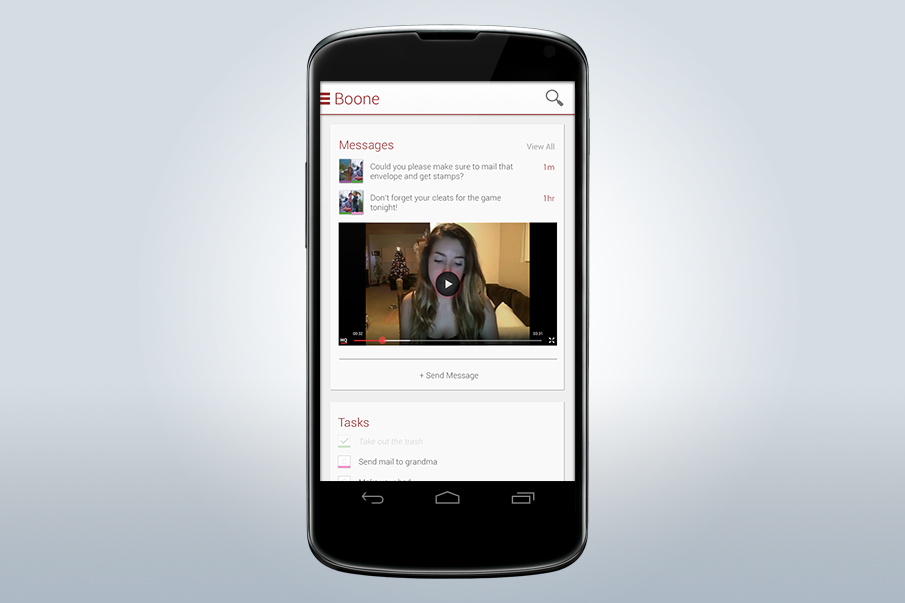
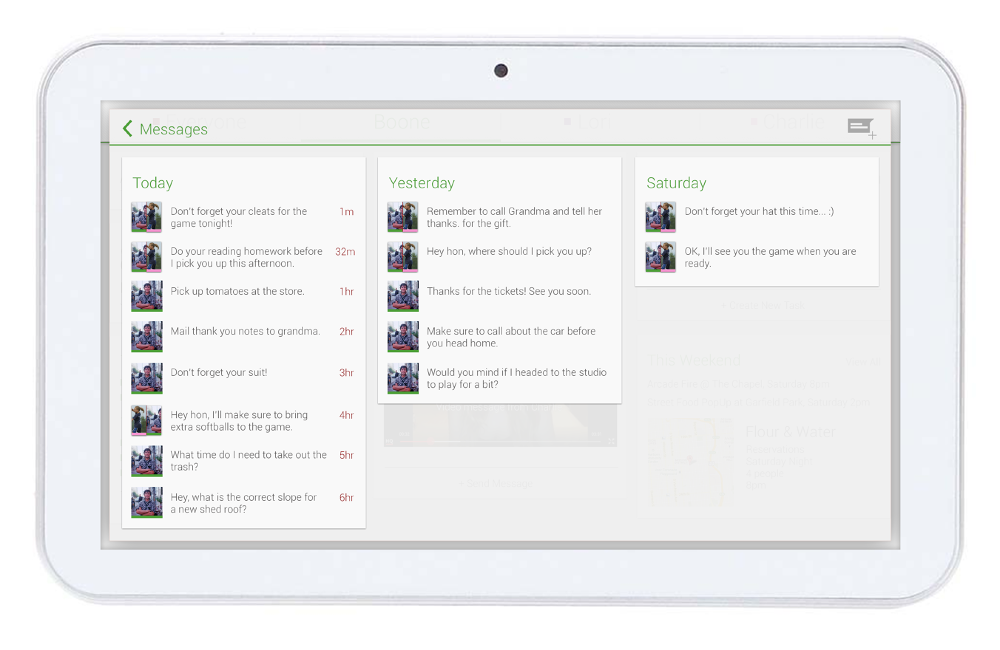
 Finally, one of the most important parts of this idea is the mobile device that connects the family member to the central location. Each satellite device can act as task manager, message sender & receiver, appointment reminder and more. It should be a seamless process, much like Google Now, anticipating your needs, connecting you when you need to, and reminding you of your family priorities as they arise.