Android Personal Safety is Google's platform for keeping users safe in emergencies — from car crashes to cardiac events to natural disasters. I've been the product lead for the app since joining Google, growing it from roughly 40 million installs to over 800 million active devices through a combination of new features, hardware integration with Pixel, and OEM partnerships that brought the platform to Android devices well beyond Pixel.
 Core Features
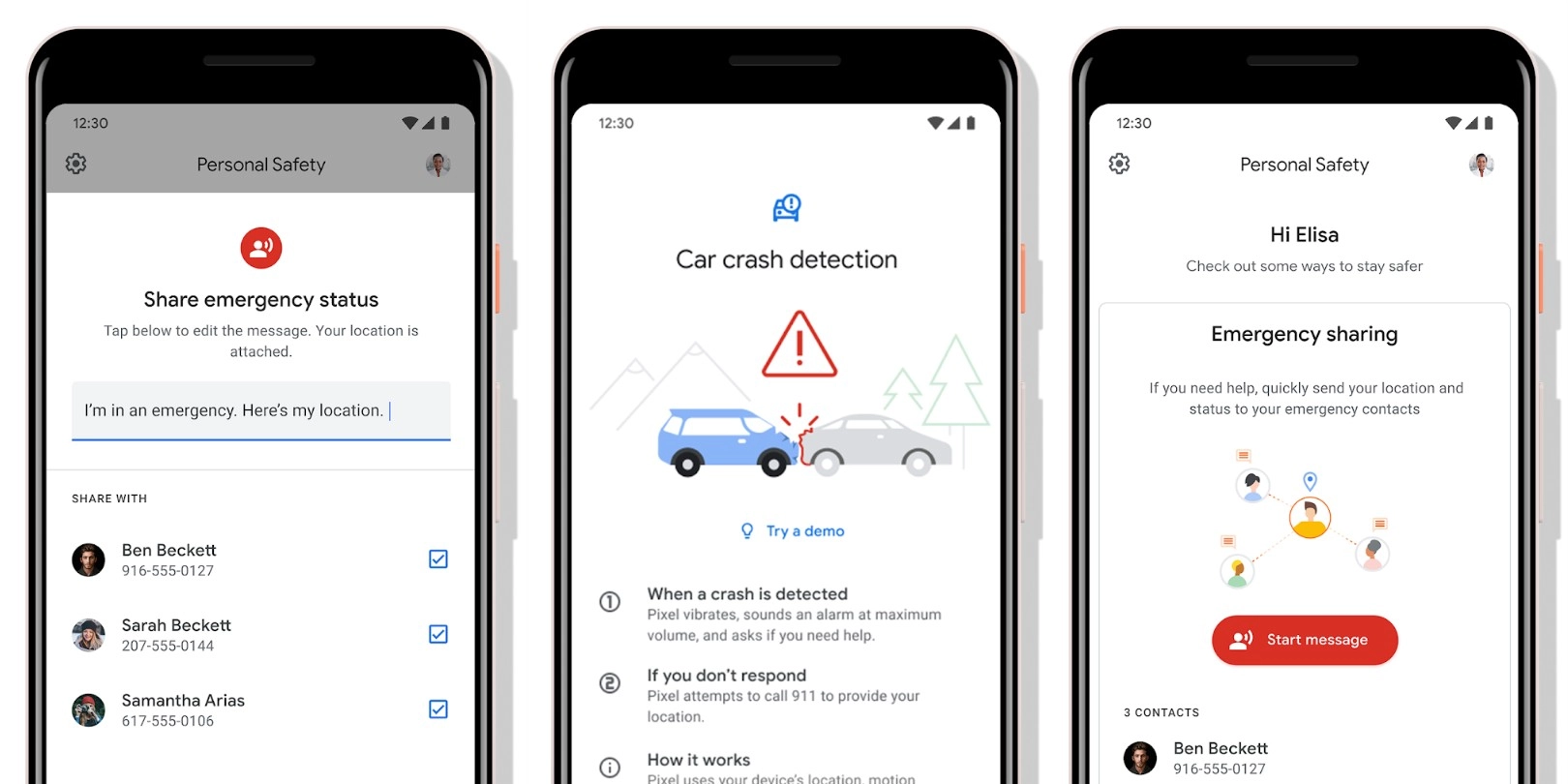
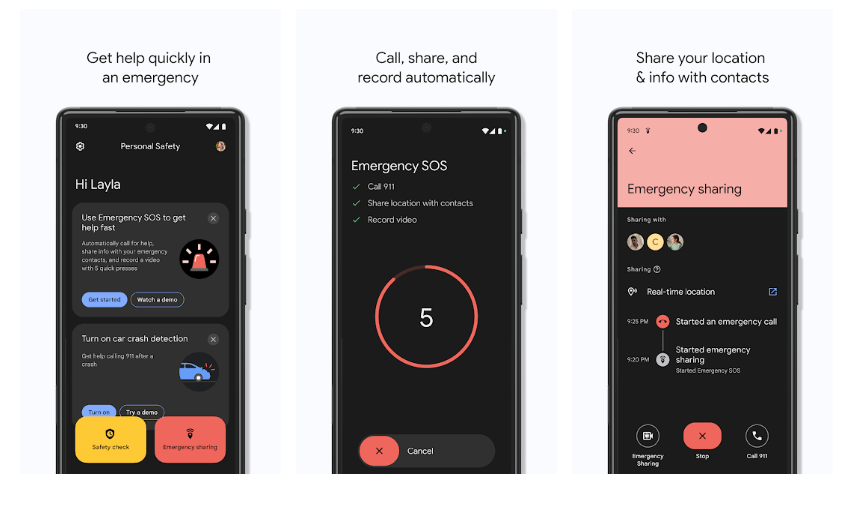
Personal Safety bundles the key emergency capabilities Android users rely on. Emergency SOS lets anyone call emergency services instantly — pressing the power button five times triggers an alarm, places a call to 911, and shares the user's location. Emergency Sharing goes further, letting users proactively share their real-time location and battery level with trusted contacts, with automatic escalation if they go out of contact. Safety Check gives users a simple check-in timer: set it before a solo hike or late-night commute, and if you don't confirm you're okay when it expires, Emergency Sharing starts automatically.
Medical Information lets users store blood type, allergies, medications, and emergency contacts directly on the device — accessible from the lock screen without unlocking, so first responders can act quickly even if the user is unconscious. Crisis Alerts surfaces emergency broadcasts and local weather warnings from national and regional authorities.
 Car Crash Detection
Car Crash Detection uses a combination of the device's accelerometer, microphone, and location data to recognize the signature of a severe vehicular collision. When a crash is detected, the phone plays a loud alarm and gives the user a short window to confirm they're okay. If there's no response, it automatically calls emergency services and shares precise location data — no manual action required. The feature launched on Pixel phones and later expanded to Pixel Watch as part of the broader wrist-worn safety platform.
Pixel Watch IntegrationOn Pixel Watch, Personal Safety extends to the wrist with Fall Detection and Loss of Pulse Detection — capabilities that require the optical heart rate and motion sensors only available in wearables. Fall Detection monitors the accelerometer and gyroscope for the impact signature of a hard fall, then alerts emergency services if the user doesn't respond. Loss of Pulse Detection, which received FDA clearance in 2025 as the first cleared smartwatch feature of its kind in the United States, uses a multimodal PPG algorithm to detect cardiac arrest and place an automatic 911 call. Together these capabilities position Pixel Watch as a wearable safety platform capable of responding to falls, crashes, and cardiac events.
Expanding Beyond PixelA major part of growing Personal Safety to 800M+ devices was establishing OEM partnerships to bring the platform to non-Pixel Android devices. Starting with Android 13, Google made Personal Safety available as an option for third-party manufacturers — and OEMs including Nothing, Sony, iQOO, and Vivo began pre-installing it on their devices. The strategy was to treat Personal Safety not as a Pixel differentiator but as a platform capability for Android at large, making life-saving tools accessible to users regardless of what device they carry.
Emergency Location ServiceUnderlying all of Personal Safety's emergency calling features is deep integration with Emergency Location Service (ELS), which delivers precise location data to 911 dispatch centers in supported regions. ELS improves on standard GPS by combining cell, Wi-Fi, and sensor data to produce a location that's reliable even indoors or in areas with poor signal — critical when the user is incapacitated and can't describe where they are.
Google · Group Product Manager · Android Peace of Mind · Personal Safety · 2019–present