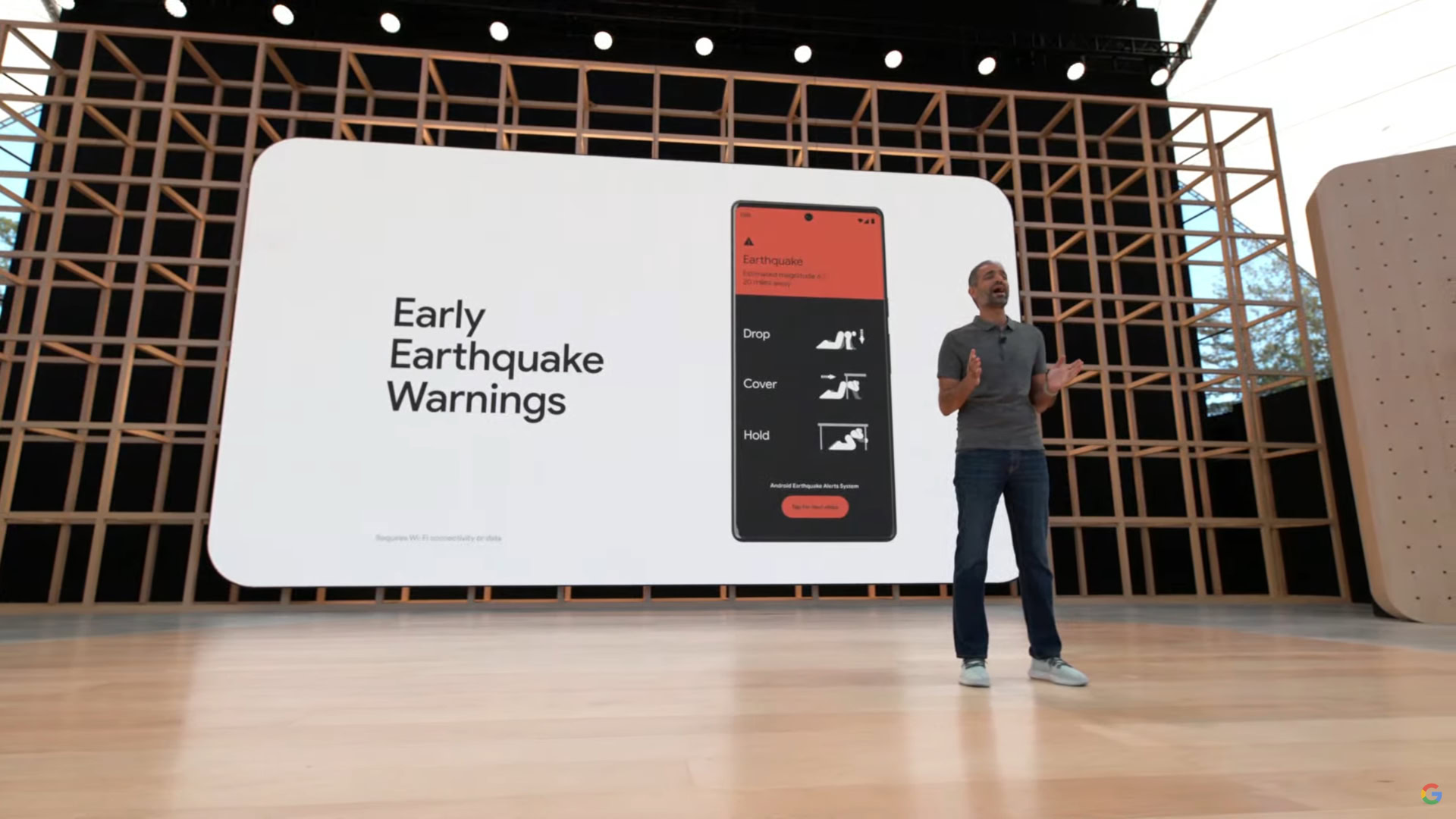
 The core insight was both simple and staggering: the same accelerometer that flips your screen when you rotate your phone can also detect the initial P-wave of an earthquake. With 2+ billion Android phones in use around the world, that meant we already had the infrastructure for a global early warning system. We just had to build it.
How It Works
When a stationary Android phone detects vibrations consistent with a seismic P-wave, it sends an anonymized signal to Google's earthquake detection server along with a coarse location. The server aggregates signals from many phones simultaneously — cross-referencing speed, intensity, and location — to confirm an earthquake is occurring and estimate its magnitude and epicenter in near-real time.
That data then triggers alerts to Android users in the affected area, giving them precious seconds to drop, cover, and hold on before the stronger shaking arrives.
Two Alert Types
The system delivers two levels of alert depending on expected shaking intensity:
Be Aware — sent for weak to light shaking, giving users a heads-up to prepare. Take Action — sent for moderate to extreme shaking, prompting immediate protective action. Both alerts are only triggered for earthquakes of magnitude 4.5 or greater with MMI 5+ shaking expected.
Overview
The core insight was both simple and staggering: the same accelerometer that flips your screen when you rotate your phone can also detect the initial P-wave of an earthquake. With 2+ billion Android phones in use around the world, that meant we already had the infrastructure for a global early warning system. We just had to build it.
How It Works
When a stationary Android phone detects vibrations consistent with a seismic P-wave, it sends an anonymized signal to Google's earthquake detection server along with a coarse location. The server aggregates signals from many phones simultaneously — cross-referencing speed, intensity, and location — to confirm an earthquake is occurring and estimate its magnitude and epicenter in near-real time.
That data then triggers alerts to Android users in the affected area, giving them precious seconds to drop, cover, and hold on before the stronger shaking arrives.
Two Alert Types
The system delivers two levels of alert depending on expected shaking intensity:
Be Aware — sent for weak to light shaking, giving users a heads-up to prepare. Take Action — sent for moderate to extreme shaking, prompting immediate protective action. Both alerts are only triggered for earthquakes of magnitude 4.5 or greater with MMI 5+ shaking expected.
Overview
2B+
Android phones acting as mini-seismometers worldwide
700+
USGS ShakeAlert seismometers on the US West Coast
Seconds
of warning delivered before strong shaking arrives

 Publication